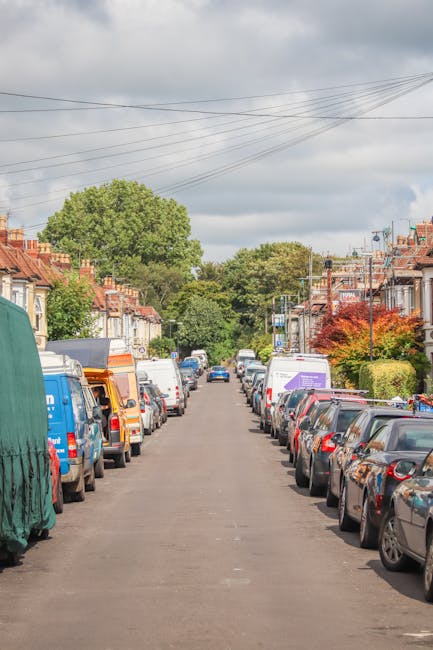
SW17 removals costs and parking tips near Tooting Market
If you are planning a move in SW17, the two things that tend to cause the most stress are simple enough on paper: what the removals will cost, and where on earth the van is going to park near Tooting Market. In real life, those two issues shape the whole moving day. A neat quote can unravel fast if access is awkward, while a good parking plan can save you time, money, and a lot of back-and-forth with boxes in the rain. This guide breaks down SW17 removals costs and parking tips near Tooting Market in a way that is actually useful, so you can plan with confidence rather than guesswork.
Whether you're moving from a flat above a shop, a family home off the high street, or a student place with tight stairs and tighter kerb space, the basics are the same: know what drives the price, understand the local access issues, and build a plan that keeps the day calm. It sounds obvious. It rarely is. Let's make it easier.
Table of Contents
- Why SW17 removals costs and parking tips near Tooting Market Matters
- How SW17 removals costs and parking tips near Tooting Market Works
- Key Benefits and Practical Advantages
- Who This Is For and When It Makes Sense
- Step-by-Step Guidance
- Expert Tips for Better Results
- Common Mistakes to Avoid
- Tools, Resources and Recommendations
- Law, Compliance, Standards, or Best Practice
- Options, Methods, or Comparison Table
- Case Study or Real-World Example
- Practical Checklist
- Conclusion
- Frequently Asked Questions
Why SW17 removals costs and parking tips near Tooting Market Matters
Tooting Market sits in one of the busiest, most lived-in parts of SW17, and that matters because removals are never just about lifting furniture. They are about timing, access, and avoiding expensive friction. A move that looks straightforward on a quote can become slower and costlier if the van cannot stop nearby, if the driver has to wait, or if your flat is a few flights up with no lift. In other words, the postcode is only part of the story.
SW17 removals costs and parking tips near Tooting Market matter because this part of London tends to combine busy streets, mixed housing types, narrow approaches, and parking that can be a bit of a puzzle. You might have a terraced house with a decent front bay, or you might have a top-floor flat above a cafe with a loading gap that disappears before breakfast is done. Same area. Very different moving day.
The cost side is important too. Removal companies usually price based on time, crew size, access, load size, distance, and any special handling. Parking affects at least three of those. If the van is far away, porters take longer. If there is no safe stopping point, more time is spent shuttling items. If a second trip is needed, the price climbs again. It's not dramatic. It's just how the maths works.
Expert summary: In SW17, the cheapest move is rarely the one with the lowest headline quote. It is the one with the best access plan, realistic timing, and enough space to load without delays.
How SW17 removals costs and parking tips near Tooting Market Works
Most local removals are priced using a mix of hourly labour, vehicle type, and practical difficulty. That can feel vague at first, but it becomes more understandable once you look at the moving day like a sequence of tasks. The crew arrives, parks, carries, loads, secures the items, travels, unloads, and possibly returns for additional items. Any delay in one stage affects the others.
For smaller jobs, many customers use a man and van style service, while larger home moves may need a bigger team or a moving truck. If you are dealing with a one-bedroom flat, a minimal furniture load, or a few bulky items, a flexible man and van service or a man with van arrangement can be a sensible fit. For family homes, multiple rooms, or heavier furniture, a fuller service usually works better.
Parking near Tooting Market is the practical piece that often gets missed. Market periods, school runs, weekend footfall, and general South London traffic can make stopping patterns less forgiving. Even when there is technically space, it may not be usable if it blocks traffic or if another vehicle is already occupying the spot. So the move is not just "find parking." It is "find a position that lets the team work without constant interruption."
Here is the simple version: the more direct the parking access, the more efficient the move. The more efficient the move, the more predictable the final bill.
Many people also underestimate the effect of packaging and preparation. If boxes are sealed, labelled, and stacked sensibly, loading time drops. If they are half-packed, awkwardly taped, or scattered through the property, the crew has to spend time reorganising on site. That is one of those tiny details that becomes a big one at 10:15 on moving morning.
Key Benefits and Practical Advantages
There is a genuine advantage to planning both cost and parking in one go. It keeps the move coherent. You are not treating parking as a side issue, and you are not treating price as a guess. That mindset saves hassle.
- More accurate quotes: When access details are clear, estimates are more realistic and less likely to shift later.
- Less waiting time: The crew can start sooner and keep the job moving.
- Lower physical strain: Better parking means shorter carries. That matters for you and for the movers.
- Reduced risk of damage: Fewer long carries and fewer rushed trips usually mean fewer knocks and scrapes.
- Better day-of control: You know where the vehicle can go, what the access looks like, and what the plan is if the space is taken.
There is also a comfort factor, and people do not talk about that enough. A move near Tooting Market can feel noisy and busy even on an ordinary weekday. If you know the parking plan in advance, the day feels less exposed. You will notice the difference almost immediately. The first box goes out, the van is where it should be, and the whole thing just breathes a bit easier.
If you are comparing moving options, it helps to look beyond the bare price. Services like removals and removal services can cover different levels of support, from simple transport to fuller handling. For flats with stairs or tight entrances, flat removals are often the better match because they reflect the realities of the property rather than pretending every move is the same.
Who This Is For and When It Makes Sense
This topic is especially relevant if you are moving in or around SW17 and any of the following sound familiar:
- You live within walking distance of Tooting Market and parking is usually tight.
- Your property has no driveway, or the driveway is too short for a van.
- You are moving from a flat, maisonette, or upper-floor conversion.
- You have bulky furniture that will need careful handling.
- You want a fixed, sensible budget rather than a vague moving estimate.
- You need the move done quickly, perhaps because of a tenancy change or completion date.
It also makes sense for landlords, letting agents, and small business owners. A shop, office, or studio near the market can have access issues very different from a typical house move. In those cases, commercial support such as commercial moves or office removals may be more appropriate than a standard domestic service.
And if you're a student or moving on a tighter budget, the planning still matters, maybe even more. Smaller moves are often the ones where people assume parking will sort itself out. Then the van ends up circling for 20 minutes while everyone stands around with a mattress. Not ideal. A service like student removals can be a calmer fit for those lighter, faster jobs.
Step-by-Step Guidance
Use this simple sequence to keep the move practical, especially near busy streets around Tooting Market.
- List everything you are moving. Walk room by room and separate furniture, boxes, fragile items, and anything awkward such as mirrors or long lamps.
- Check the access route. Note stairs, narrow hallways, lift access, rear entry, and any sharp corners that could slow the team down.
- Measure the parking reality. Think about whether a van can stop directly outside, whether a short loading stop is possible, or whether the crew will need to work from a nearby side street.
- Choose the right vehicle and crew size. A small load may suit a van, while a full household may need a larger vehicle or more hands.
- Request a quote with clear access details. If you hide the awkward bits, the quote will almost certainly be less accurate. Best to be honest from the start.
- Pack and label early. If possible, have boxes ready the night before, with fragile items clearly marked.
- Reserve or confirm parking arrangements. Even if no formal permit is needed, make a plan for where the van can load and how long it can stay there safely.
- Keep essentials separate. Documents, keys, chargers, medication, and a kettle if you are being sensible. The kettle is never a bad idea.
One small but important point: on move day, do a last-minute street check before the crew arrives. A perfectly good loading spot can disappear fast. If the bay is taken, you need a backup plan straight away, not after half the contents of your kitchen are already on the pavement.
For people who want extra help with packing, a professional packing and boxes option or packing and unpacking services can reduce time pressure. And if you are moving between properties with a gap in dates, storage can be a smart bridge rather than trying to force everything into one chaotic day.
Expert Tips for Better Results
In our experience, the smoothest SW17 moves are rarely the fanciest. They are the ones where the basics were handled well.
- Book for quieter hours if you can. Early starts can help, but you should weigh that against how busy the street usually is. Around market activity, a slightly later window may be easier if loading space improves.
- Keep the largest items closest to the exit. If a sofa has to be carried through three rooms and around a tight corner, clear the route in advance.
- Protect the floors and door frames. A simple bit of planning avoids scuffs, especially in older properties where hallways are already a bit tired.
- Tell the mover about any parking pinch points. If there is a height restriction, narrow access road, or one-way approach, say so early. It helps planning a lot.
- Have a backup place for the van. A nearby side street is often more useful than hoping for a perfect spot right outside the door.
- Ask how waiting time is handled. This is one of those boring questions that saves trouble later. Worth asking, frankly.
Another thing people overlook: weather. A wet morning changes everything. Boxes get slippery, loading takes longer, and nearby parking matters even more because nobody wants items sitting in drizzle while you search for the van. It sounds small until it is happening.
If you are moving a particularly awkward item, a piano, for example, do not treat it like standard furniture. Specialist help such as piano removals exists for a reason. Heavy objects with delicate internal parts need proper handling, and the parking layout matters even more when a large item has to be manoeuvred safely from the door to the vehicle.
Common Mistakes to Avoid
Some mistakes are minor. Others are the sort that quietly eat money. The good news is that most are easy to avoid once you know what to look for.
- Assuming parking will be fine on the day. Around Tooting Market, that is more hope than strategy.
- Underestimating stair time. A third-floor walk-up can change the whole pace of the move.
- Leaving packing until the last evening. It almost always slows things down. Always.
- Booking a vehicle that is too small. Multiple trips are tiring and often more expensive than a better-sized initial booking.
- Forgetting awkward items. Bins, plants, mirrors, bikes, TV stands - they sneak up on you somehow.
- Not explaining access restrictions. If the van cannot park directly outside, say it clearly.
- Ignoring the terms of service. This is where details around delays, cancellations, or payment timing are usually set out.
A classic local mistake is trying to do a "quick move" at the same time as the busiest street periods. It feels efficient in theory. In practice, it can become a bit of a shuffle. Sometimes the smarter move is simply to pick a calmer window and accept that slower can actually be cheaper.
If you are comparing providers, it can help to look at the full range of services rather than only the headline transport option. A business that also offers home moves, house removals, or house removalists may be better set up for varied access conditions, especially where the property layout is less straightforward.
Tools, Resources and Recommendations
You do not need a pile of specialist equipment to organise a good move, but a few simple tools make a big difference.
- Notebook or phone notes: Keep a clear list of furniture, room labels, and access issues.
- Measuring tape: Useful for checking door widths, sofa dimensions, and whether a bed frame will need dismantling.
- Marker pens and labels: Basic, not glamorous, very effective.
- Bin bags and tape: Handy for soft items, loose cables, and last-minute tidying.
- Loading plan: Decide which items go first so the van is packed sensibly.
For a better result, choose a removals company that is clear about pricing and security. A dedicated pricing and quotes page should help you understand what affects the final figure, while payment and security tells you more about how transactions are handled. That kind of clarity matters, especially when you are already juggling keys, inventory, and the timing of the lift arriving.
It is also sensible to check practical protections. Insurance and safety and a clear health and safety policy are signs that the business takes its responsibilities seriously. That is not just box-ticking. It tells you how they approach risk when they are lifting, carrying, and parking in a busy area.
Law, Compliance, Standards, or Best Practice
This kind of move is not usually complicated from a legal point of view, but there are still sensible rules and norms to respect. In London, parking, loading, and obstruction rules matter because streets have to stay safe and passable. You should always avoid blocking driveways, junctions, crossings, or access for other residents. If a loading bay or paid parking space is available, use it properly and for the allowed time. If you are unsure, treat caution as your default.
Best practice for removals in SW17 is simple: communicate access details early, avoid unsafe stopping, and make sure lifting work is carried out in a way that reduces risk to people and property. That includes using enough people for the weight involved, protecting fragile items, and planning routes so nobody is carrying a wardrobe backwards through a tight hall because nobody thought to check the angle. It happens. More than you'd think.
On the customer side, you should also read the service terms carefully. If there are waiting charges, cancellation conditions, or responsibilities for parking arrangements, those should be understood before moving day. That is just good housekeeping, and honestly it saves awkward conversations later.
If sustainability matters to you, it is worth asking how unwanted items are handled. A mover with a clear recycling and sustainability approach may be able to separate reusable furniture from general waste more responsibly. Likewise, if you have single items to dispose of, furniture removals or furniture pick up can be a practical way to reduce clutter without creating extra hassle.
Options, Methods, or Comparison Table
Different move types suit different property layouts and budgets. Here is a simple comparison to help you judge what fits best near Tooting Market.
| Option | Best for | Typical advantages | Possible drawbacks |
|---|---|---|---|
| Man and van | Small flats, a few bulky items, lighter moves | Flexible, usually quicker to arrange, suitable for shorter loading distances | Less suitable for larger homes or complex access |
| Full removals team | Family homes, larger loads, multiple floors | More lifting support, better for awkward or heavy items | Usually costs more than a basic vehicle-only option |
| Same-day removals | Urgent moves, last-minute tenancy changes | Fast turnaround, good for short-notice needs | Less room for planning; parking issues matter even more |
| Storage-led move | Gaps between move-out and move-in dates | Reduces pressure, prevents rushed decisions | Extra handling and storage costs may apply |
If you are unsure which route fits, think about load size first, then access, then urgency. People often start with urgency and regret it. A better question is: what will make the day feel smooth, not just fast?
For urgent situations, same-day removals can help when timing has gone sideways. For larger vehicle needs, a moving truck or removal truck hire may be more efficient than trying to squeeze everything into a smaller van. And if you are comparing transport styles, the differences between man with a van and man with van services can be more about service style than pure wording, so ask what is included rather than relying on the label alone.
Case Study or Real-World Example
Here is a realistic example based on the kind of move people make around Tooting Market all the time.
A couple moving from a second-floor flat just off the market had one sofa, two beds, a dining table, around 25 boxes, and a few awkward plants that somehow became the most stressful items in the room. They originally assumed a small van would be enough. On paper, maybe. In practice, the stairs and parking meant the job would have taken too long and likely needed a second trip.
After reviewing access, they switched to a slightly larger vehicle and blocked out an earlier loading window. They also moved smaller boxes to the front room the night before, so the crew could work straight from the entrance. The parking plan was simple: a nearby loading position, a backup side street, and one person watching the space while the other finished packing the last few things. Nothing heroic. Just sensible.
The result was a calmer day, fewer lift runs, and less carrying time. The move still took effort, of course. Moves always do. But it felt organised rather than chaotic, and nobody was left standing in the hallway asking whether the van had arrived yet. That alone can be worth a lot.
That kind of preparation also helps when you need a broader service package. If the move involves a house, a flat, or even a short-term gap before the next place is ready, services like home moves and flat removals can be matched more closely to the property and access conditions.
Practical Checklist
Use this checklist in the final 48 hours before moving day. Nothing fancy. Just the things that prevent little problems from becoming big ones.
- Confirm the moving time and arrival window.
- Share full access details, including stairs, lifts, and entrance codes if needed.
- Check parking options near the property and choose a backup spot.
- Finish packing non-essentials and label every box clearly.
- Set aside valuables, keys, and documents in one bag.
- Dismantle furniture if that will help with the route out.
- Protect fragile items and mark them as such.
- Clear corridors, hallways, and doorways.
- Keep a mobile phone charged on the day.
- Have water and a quick snack available. Honestly, you will be glad of it.
If you have specialised items, you may need a more tailored approach. For example, bulky items can benefit from a dedicated furniture removals plan, while business relocations may need office relocation services with tighter scheduling and less disruption.
Get a free quote today and see how much you can save.
Conclusion
SW17 removals costs and parking tips near Tooting Market come down to one simple truth: the move is only as smooth as its access plan. If you understand the likely cost drivers, think realistically about parking, and prepare the property properly, you give yourself a much better chance of keeping the day under control. The move may still be busy. It probably will be. But it does not have to be messy.
To be fair, not every moving day will go exactly to plan. A space may be taken, a box may be heavier than expected, or the weather may decide to join the conversation. Yet a well-prepared move has room for those little surprises. That is the difference between coping and spiralling.
If you are at the point of comparing options, look for clear pricing, good access planning, and the right level of support for the property you are leaving. A few thoughtful decisions now can save a surprising amount of stress later. And that, in a busy corner of SW17, is worth quite a lot.
Frequently Asked Questions
How much do removals in SW17 usually cost?
The price usually depends on the size of the load, the number of movers needed, the access at both properties, and how long the job is likely to take. A flat with awkward stairs near Tooting Market may cost more than a ground-floor property because of the extra time involved.
Why does parking affect my removals quote?
Because parking changes how long the crew spends loading and unloading. If the van cannot park close by, the team may need more time and extra carrying distance, which can increase the final cost.
Is a man and van service enough for a move near Tooting Market?
Sometimes yes, especially for smaller flats, student moves, or a few bulky items. If you have a larger household or multiple floors, a bigger removals team may be more efficient.
Should I book parking in advance?
If advance parking arrangements are possible for your street or property, it is usually wise to explore them. Even when formal booking is not needed, having a clear loading plan and a backup space is very helpful.
What if the van cannot stop directly outside my property?
That is common in busy SW17 streets. A nearby side street or loading area can still work, but it should be planned in advance so the team knows the best route and expected carry distance.
How can I reduce moving costs without cutting corners?
Pack early, label clearly, dismantle bulky furniture if appropriate, and give accurate access details from the start. Small efficiencies like that can make a real difference.
Are weekend moves more expensive?
They can be, depending on demand and timing. They may also be trickier near busy local spots like Tooting Market, so it is worth asking for options if you are flexible.
Do I need specialist help for heavy or awkward items?
Yes, for some items it is the safer choice. Pianos, large wardrobes, and delicate furniture can benefit from specific handling rather than a standard one-size-fits-all approach.
What should I tell the removals company before moving day?
Tell them about stairs, lifts, parking limitations, narrow entrances, heavy items, and any time restrictions. Clear information leads to a more accurate quote and a less stressful day.
Is storage useful if my move dates do not line up?
Very useful. If there is a gap between leaving one property and entering another, storage can remove pressure and stop you from making rushed decisions with furniture and boxes.
How do I know whether I need a larger vehicle?
If you have multiple rooms of furniture, large appliances, or several bulky items, a larger vehicle is often the safer bet. When in doubt, ask for a quote based on a full inventory rather than guessing.
What is the best way to avoid delays near Tooting Market?
Choose a quieter moving window where possible, confirm parking access in advance, pack everything before the team arrives, and keep a backup parking option in mind. A calm, practical plan beats a rushed one every time.